
 Business License

Understanding Stainless Steel Pipe Sizes: Key Dimensions and Standards You Should Know
Navigating the world of industrial materials can be complex, especially when dealing with components as crucial as pipes. For engineers, contractors, and project managers, selecting the correct pipe size is a decision that impacts the safety, efficiency, and longevity of a system. Stainless steel pipes, known for their durability and corrosion resistance, are a top choice for countless applications, but their sizing standards can be confusing.
This guide will demystify stainless steel pipe sizes. We will explore the key dimensions, industry standards, and common grades that define these essential components. By the end of this post, you will have a clear understanding of how to interpret pipe specifications, select the appropriate dimensions for your project, and appreciate why precision in this area is non-negotiable. Whether you are designing a new plumbing system or managing a large-scale industrial project, this information will help you make informed decisions.
Introduction to Stainless Steel Pipes
What are Stainless Steel Pipes?
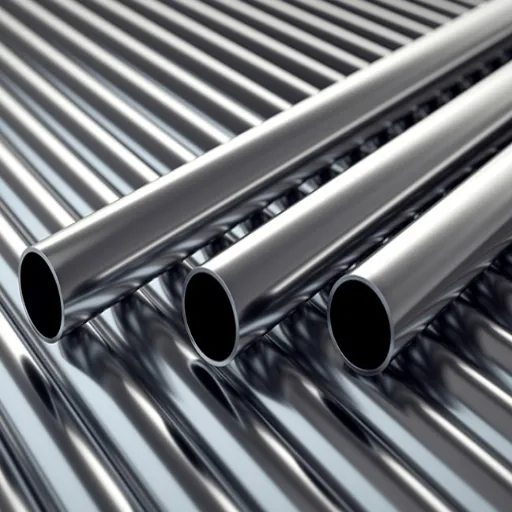
Stainless steel pipes are hollow cylindrical tubes made from a steel alloy containing at least 10.5% chromium. This chromium content is what gives stainless steel its defining characteristic: a passive, self-repairing layer of chromium oxide on its surface. This layer protects the steel from rust and corrosion, making it suitable for a wide range of environments, from food processing plants to marine applications.
Beyond chromium, other elements like nickel, molybdenum, and manganese can be added to the alloy to enhance specific properties. These additions can improve formability, increase strength at high temperatures, or boost resistance to specific types of corrosion, like pitting and crevice corrosion in chloride-rich environments.
The Importance of Pipe Dimensions
The dimensions of a pipe are critical to its performance. They determine the pipe's capacity to handle fluid flow, its ability to withstand internal pressure, and its compatibility with other system components like fittings, valves, and flanges. An incorrectly sized pipe can lead to a host of problems, including:
Reduced Flow Rate: A pipe that is too small can restrict fluid flow, leading to inefficiencies and increased energy consumption for pumps.
Pressure Drops: Inadequate diameter can cause significant pressure drops along the length of the pipe, affecting the performance of the entire system.
Structural Failure: A pipe with insufficient wall thickness may not be able to withstand the operational pressure, leading to leaks or catastrophic failure.
Installation Challenges: Mismatched dimensions can make it difficult or impossible to connect pipes and fittings, causing delays and increasing labor costs.
Precise adherence to standardized dimensions ensures that every component in a system fits together seamlessly and performs as designed.
Overview of Common Grades: 304 and 316
While there are many grades of stainless steel, two are particularly dominant in the pipe industry: Grade 304 and Grade 316.
Grade 304 Stainless Steel: This is the most widely used grade of stainless steel, often referred to as "18/8" due to its typical composition of 18% chromium and 8% nickel. Grade 304 offers excellent corrosion resistance in a variety of environments and has good formability and weldability. It is a cost-effective choice for general-purpose applications in industries like food and beverage, pharmaceuticals, and construction.
Grade 316 Stainless Steel: Grade 316 contains the same amount of chromium and a higher percentage of nickel than Grade 304, but with the important addition of molybdenum (typically 2-3%). This molybdenum content significantly enhances its resistance to corrosion, particularly against chlorides and other industrial solvents. This makes Grade 316 the preferred choice for marine environments, chemical processing plants, and medical implants where exposure to corrosive agents is high.
Understanding Pipe Dimensions and Sizes
Standard Pipe Sizes and Schedule Numbers
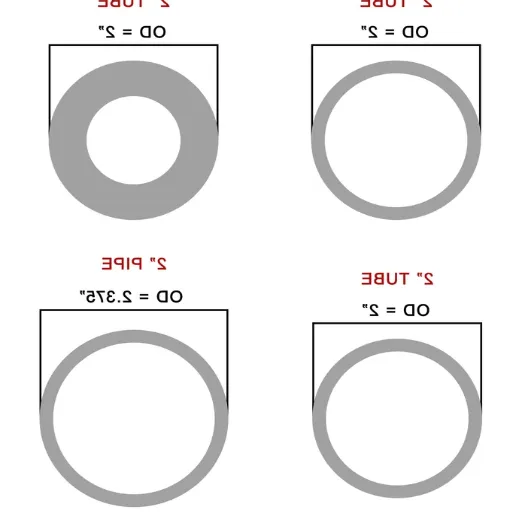
The sizing system for pipes can be counterintuitive at first. The primary identifier for a pipe is its Nominal Pipe Size (NPS). For NPS values of 12 inches and under, the NPS is a dimensionless number that is loosely related to the inside diameter of the pipe. For example, a 2-inch NPS pipe does not have an inside or outside diameter of exactly 2 inches. For NPS values of 14 inches and above, the NPS corresponds directly to the outside diameter (OD) in inches.
The other crucial dimension is the pipe schedule (SCH). The schedule number indicates the wall thickness of the pipe. For a given NPS, a higher schedule number means a thicker wall. A thicker wall increases the pipe's mechanical strength and its ability to handle higher internal pressures. Common schedules include SCH 5, 10, 40, and 80.
For example, a 4-inch NPS pipe is available in various schedules. A 4" SCH 40 pipe will have a thicker wall than a 4" SCH 10 pipe, and therefore a smaller inside diameter (ID). The outside diameter, however, remains the same for a given NPS regardless of the schedule. This standardization of the OD is critical because it ensures that pipes of the same NPS can use the same fittings and flanges, regardless of wall thickness.
Dimensions of 304 and 316 Stainless Steel Pipes
The dimensions for Grade 304 and 316 stainless steel pipes are identical for the same NPS and schedule number. The grade of the material affects its mechanical properties and corrosion resistance, but not its physical dimensions. When ordering, you must specify the NPS, the schedule, and the material grade (e.g., 4" SCH 40, Type 316L Stainless Steel Pipe).
Weight and Wall Thickness Considerations
The wall thickness is a direct consequence of the NPS and schedule number. It is a critical parameter for calculating the pipe's pressure rating. The inside diameter (ID) can be calculated by subtracting twice the wall thickness from the outside diameter (ID = OD - 2 x Wall Thickness).
The weight of the pipe is another important consideration, especially for structural support and transportation logistics. The weight is typically expressed in pounds per foot or kilograms per meter. It is calculated based on the pipe's dimensions and the density of the stainless steel. Since Grade 316 has a slightly higher density than Grade 304 due to its molybdenum content, it will be marginally heavier for the same dimensions, but this difference is often negligible in practical applications.
Specifications and Standards for Stainless Steel Pipes
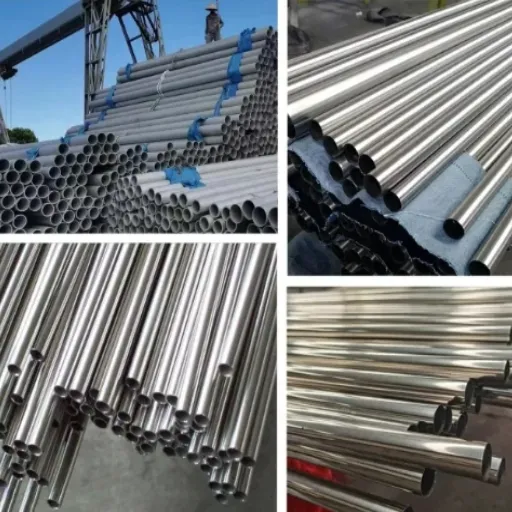
ASTM A312 Specification Overview
ASTM A312 is one of the most important specifications for stainless steel pipes. It covers seamless, straight-seam welded, and heavily cold-worked welded austenitic stainless steel pipe intended for high-temperature and general corrosive service. Key aspects of the A312 specification include:
Material Grades: It specifies the chemical composition for numerous grades of austenitic stainless steel, including 304, 304L, 316, and 316L. The "L" designation indicates a lower carbon content, which improves weldability by reducing the risk of carbide precipitation.
Manufacturing Process: It outlines the requirements for both seamless and welded pipe manufacturing.
Mechanical Properties: It defines the minimum tensile strength and yield strength requirements for the pipe.
Dimensions and Tolerances: It references the dimensional standards to be used, primarily ASME B36.19 and B36.10.
Testing and Inspection: It mandates various tests, such as hydrostatic testing (to check for leaks) and non-destructive electric tests, to ensure the integrity of the pipe.
ASME Standards for Stainless Steel Pipe
ASME provides the dimensional standards that are often referenced by ASTM specifications. The two most relevant for stainless steel pipes are:
ASME B36.19 - Stainless Steel Pipe: This standard covers the dimensions and weights of stainless steel pipes. It includes schedules with thinner walls, such as SCH 5S and 10S, which are common for stainless steel due to its strength and corrosion resistance (the 'S' suffix indicates it's for stainless steel).
ASME B36.10M - Welded and Seamless Wrought Steel Pipe: This standard covers the dimensions of carbon and alloy steel pipes. While B36.19 is specific to stainless steel, many of its dimensions overlap with B36.10. For schedules where B36.19 does not provide a dimension (like SCH 40 or 80 for certain sizes), the dimensions from B36.10 are used.
Chart of Dimensions and Weights
Below is a partial chart illustrating the relationship between NPS, Schedule, OD, Wall Thickness, and Weight for stainless steel pipe, per ASME B36.19. This demonstrates how dimensions change with schedule for a fixed NPS.
NPS | Schedule | Outside Diameter (in) | Wall Thickness (in) | Weight (lb/ft) | Inside Diameter (in) |
|---|---|---|---|---|---|
1" | 10S | 1.315 | 0.109 | 1.44 | 1.097 |
40S | 1.315 | 0.133 | 1.73 | 1.049 | |
80S | 1.315 | 0.179 | 2.24 | 0.957 | |
2" | 10S | 2.375 | 0.109 | 2.64 | 2.157 |
40S | 2.375 | 0.154 | 3.68 | 2.067 | |
80S | 2.375 | 0.218 | 5.07 | 1.939 | |
4" | 10S | 4.500 | 0.120 | 5.51 | 4.260 |
40S | 4.500 | 0.237 | 10.85 | 4.026 | |
80S | 4.500 | 0.337 | 15.06 | 3.826 |
(Note: Weights are approximate and can vary slightly.)
Applications of Stainless Steel Pipes

Seamless vs. Welded Stainless Steel Pipes
Stainless steel pipes are manufactured in two main forms: seamless and welded.
Seamless Pipes: These are made by extruding a solid billet of steel over a piercing rod to create a hollow tube. The absence of a weld seam gives them superior strength and pressure-handling capabilities. They are often specified for critical applications in the oil and gas, chemical, and power generation industries.
Welded Pipes: These are formed by rolling a steel plate or strip into a cylinder and welding the seam. Modern welding techniques have greatly improved the quality of welded pipes, and they are often more cost-effective than seamless pipes. They are widely used in architectural applications, food processing, and water treatment systems.
Corrosion Resistance and Strength in Applications
The choice of pipe grade and schedule is directly tied to the application's demands.
Food and Beverage Industry: Uses Grade 304 pipe with thinner walls (e.g., SCH 10) for transporting liquids like milk, juice, and beer. The corrosion resistance ensures product purity, and the smooth surface is easy to clean.
Chemical Processing: Often requires Grade 316L pipe with thicker walls (e.g., SCH 40 or 80) to handle corrosive chemicals at high pressures and temperatures.
Marine Environments: Relies on Grade 316 for its superior resistance to saltwater corrosion in applications like hydraulic systems and seawater cooling lines.
Oil and Gas: Demands high-strength, corrosion-resistant alloys, often using seamless stainless steel pipe in demanding upstream and downstream processes.
Specialty Applications and Custom Sizes
While standard sizes cover most needs, some applications require custom dimensions. Specialty pipes with non-standard diameters or wall thicknesses can be manufactured for specific projects, such as in aerospace or nuclear engineering. However, these custom pipes come at a significant cost and have long lead times.
Recently Posted
-
How High Quality Seamless Rectangular Steel Pipe Enhances Structural Durability and Strength
December 18, 2025In the realm of structural engineering and industrial manufacturing, material selection dictates the longevity, safety, and effici Read More
 -
Advantages of Using High Quality Seamless Rectangular Steel Pipe in Structural Projects
December 17, 2025In modern engineering and construction, the choice of materials dictates the longevity, safety, and efficiency of a project. Among Read More
 -
Key Features of the Best Seamless Square Steel Pipe for Durability and Strength
December 16, 2025In structural engineering, heavy manufacturing, and critical infrastructure, the integrity of materials is non-negotiable. Among t Read More
 -
How New Welded Round Steel Pipe Revolutionizes Piping Systems Across Industries
December 15, 2025The integrity of industrial infrastructure relies heavily on the quality of its foundational components. From high-rise constructi Read More

Contact Us
Recommended Products
-
 China Supplier QSTE600TM Welded Square Pipe Round Cold Bending Carbon Steel TubeNegotiableMOQ: 1 Ton
 -
Buy Discount Carbon Steel Rectangular Tubing Cold Drawn Rectangular Seamless TubesNegotiableMOQ: 1 Ton
-
Agricultural Machinery Square Steel Tube Hollow Seamless Pipe Made in ChinaNegotiableMOQ: 1 Ton
-
Low Price Steel Pipes Welded Square Tube Square Hollow Cold Bending China SupplierNegotiableMOQ: 1 Ton
-
Post Weld Heat Treatment Special Shape Steel Pipe Cold Drawn Welded Seamless TubeNegotiableMOQ: 1 Ton
-
Mild Steel Welded Square Tube Mild Carbon Welded Customized Round Welded TubesNegotiableMOQ: 1 Ton
-
China Factory Supply QSTE500TM Welded Square Pipe Seamless Rectangular TubesNegotiableMOQ: 1 Ton
-
China Supplier QSTE700TM Welded Square Pipe Round Cold Bending Carbon Steel TubeNegotiableMOQ: 1 Ton
-
1.5*1.5 Inch CHS SHS RHS Hollow Section Pre Galvanized Square GI Tube Rectangular Steel GI Round PipesNegotiableMOQ: 1 Ton
-
Welded Square Steel Tube Cold Bending Seamless Steel Round Pipe Free SampleNegotiableMOQ: 1 Ton
-
Hot Sale Free Mold Customized Size Square Tube Hollow Section Welded Steel PipeNegotiableMOQ: 1 Ton
-
Hollow Section SCH80 Square Steel Pipe Seamless Rectangular Steel Pipes From ChinaNegotiableMOQ: 1 Ton
-
Agricultural Machinery Cab Structural Tube Steel PipeNegotiableMOQ: 1 Ton
-
High Performance Seamless Curved Steel Pipe With Mill Test ReportNegotiableMOQ: 1 Ton
-
High Strength Seamless Carbon Steel Pipe With Mill Test CertificateNegotiableMOQ: 1 Ton
-
ASTM A500 Grade B/C Black Annealed Welded Carbon Steel Tube - Round Square Rectangle for ScaffoldingNegotiableMOQ: 1 Ton
-
Stainless Steel Handrail Tube - Custom 202/304/316 Welded Round Pipe for BalustradesNegotiableMOQ: 1 Ton
-
20mm Diameter Stainless Steel Pipe - Custom 201/304/316 Welded/Seamless Round TubeNegotiableMOQ: 1 Ton
-
316/316L Stainless Steel Pipe - Custom Welded/Seamless Round Tube for Hydraulic SystemsNegotiableMOQ: 1 Ton
-
Custom Stainless Steel Decorative Tube - 304/316L Mirror Brushed No.4/8K Round Square Rectangular for RailingsNegotiableMOQ: 1 Ton