
 Business License

Exploring the Durability and Versatility of Stainless Steel Pipe Fittings in Plumbing Systems
Stainless steel pipe fittings are fundamental components in modern plumbing, known for their exceptional durability and versatility. From residential homes to large industrial complexes, these fittings ensure the safe and efficient transport of fluids and gases. Understanding their properties, types, and applications is crucial for anyone involved in plumbing system design, installation, or maintenance.
This guide provides a comprehensive overview of stainless steel pipe fittings. We will explore what they are, the different types available, and their various applications. We will also cover how to select the right fittings for specific needs, along with maintenance practices to ensure their longevity. For engineers, plumbers, and facility managers, this information is vital for building and maintaining robust and reliable plumbing infrastructure.
What Are Stainless Steel Pipe Fittings?
Importance of Durability in Plumbing
Durability is a non-negotiable attribute in plumbing. A system's failure can lead to significant consequences, including costly water damage, operational shutdowns, and potential safety hazards. Stainless steel's inherent strength and resistance to corrosion, high temperatures, and pressure make it an ideal material for plumbing components.
Corrosion Resistance: Unlike other metals that can rust or degrade when exposed to water and chemicals, stainless steel maintains its integrity, preventing leaks and contamination.
High-Temperature and Pressure Tolerance: Stainless steel fittings can withstand extreme conditions, making them suitable for industrial processes, hot water systems, and high-pressure pipelines.
Longevity: The durability of stainless steel translates to a longer service life, reducing the frequency of replacements and overall maintenance costs. This makes it a cost-effective choice over the long term.
Overview of Different Types of Stainless Steel
Stainless steel is not a single material but a family of alloys. The most common grades used for pipe fittings include:
304 Stainless Steel: This is the most widely used grade, offering excellent corrosion resistance and formability. It's common in residential and commercial plumbing, food processing, and chemical applications.
316 Stainless Steel: Containing molybdenum, this grade offers superior corrosion resistance, particularly against chlorides and other industrial solvents. It is the preferred choice for marine environments, chemical processing plants, and pharmaceutical manufacturing.
Duplex Stainless Steel: These grades have a mixed microstructure of austenite and ferrite, providing higher strength and better resistance to stress corrosion cracking compared to standard austenitic grades like 304 and 316.
Categories of Stainless Steel Pipe Fittings
Types of Fittings: Threads, Flanges, and Nipples
Fittings can be broadly classified by how they connect to the pipes.
Threaded Fittings
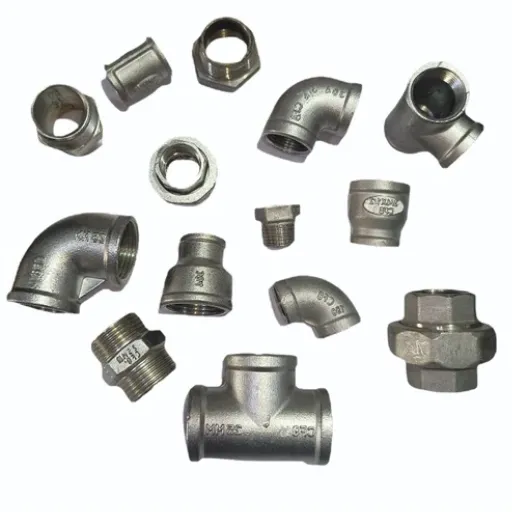
These fittings have threads—helical ridges—on their inner (female) or outer (male) surfaces. They screw onto the pipes to create a secure connection. Threaded fittings are common in low-pressure, low-temperature systems, such as residential water lines and gas piping.
NPT (National Pipe Thread): This is the U.S. standard for tapered threads on pipes and fittings. The taper allows them to form a seal when torqued.
BSPT (British Standard Pipe Taper): Similar to NPT but with a different thread angle and pitch.
Flanged Fittings
Flanges are flat, disc-like rings that are bolted together with a gasket in between to form a seal. They are used in high-pressure and high-temperature applications where a strong, easily disassembled connection is required. Industrial pipelines, such as those in oil and gas refineries and power plants, frequently use flanged fittings.
Weld Neck Flange: Welded directly to the pipe, providing a robust connection.
Slip-On Flange: Slips over the pipe and is then welded in place.
Blind Flange: Used to seal the end of a pipe or vessel.
Nipples
A pipe nipple is a short piece of pipe with male threads at both ends or at one end. It is used to connect two other fittings. Nipples are available in various lengths and are essential for extending or joining sections of a pipeline.
Popular Stainless Steel Fitting Products
Within these categories, there are many specific types of fittings, each designed for a particular function.
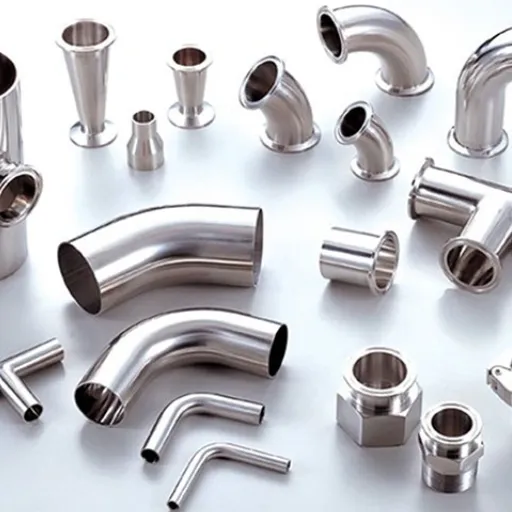
Elbows: Change the direction of flow. They are available in 45-degree and 90-degree angles.
Tees: Allow for a 90-degree branch from a main line. A "straight tee" has all three openings of the same size, while a "reducing tee" has a smaller branch opening.
Couplings: Connect two pieces of pipe of the same diameter in a straight line.
Reducers: Connect pipes of different sizes. A "concentric reducer" is cone-shaped and used for straight-line transitions, while an "eccentric reducer" is used to maintain the top or bottom level of the pipe.
Caps and Plugs: Used to seal the end of a pipe. Caps fit over the pipe (female socket), while plugs fit into the opening (male thread).
Unions: Similar to couplings but designed to be easily disconnected without cutting the pipe. They consist of three parts: two nuts and a central piece that draws the ends together.
Applications of Various Fittings in Plumbing
The choice of fitting depends entirely on the system's requirements.
Residential Plumbing: Threaded 304 stainless steel fittings are common for water and gas lines due to their corrosion resistance and ease of installation.
Commercial Buildings: A mix of threaded and welded fittings is used for water, HVAC, and fire sprinkler systems.
Food and Beverage Industry: Sanitary clamp fittings made from 304 or 316 stainless steel are required. These fittings are designed for easy cleaning and to prevent bacterial growth.
Chemical Processing: 316 and duplex stainless steel flanged fittings are used for their enhanced resistance to corrosive chemicals and high pressures.
Marine Applications: Due to saltwater's highly corrosive nature, 316 stainless steel fittings are essential for all piping systems on ships and offshore platforms.
Choosing the Right Stainless Steel Pipe Fitting
Factors to Consider: Size and Material
Material Grade
As discussed, the primary consideration is the material grade.
For general-purpose water systems, Grade 304 is often sufficient and cost-effective.
For systems exposed to salt, chlorides, or harsh chemicals, Grade 316 is necessary.
For high-stress, high-pressure environments, duplex stainless steel may be required.
Size and Dimensions
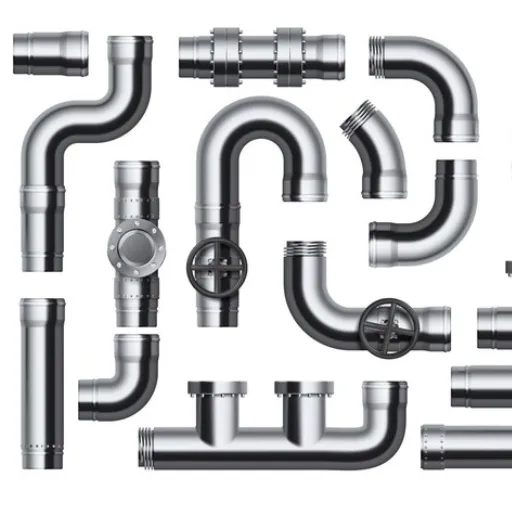
Pipe fittings must match the size of the pipes they are connecting. Pipe sizes are typically specified by their Nominal Pipe Size (NPS) and schedule (wall thickness). It is crucial to ensure the fitting's dimensions are compatible with the pipe's NPS and schedule to maintain system integrity.
Pressure and Temperature Ratings
Every fitting has a maximum pressure and temperature rating. These ratings must exceed the operating conditions of the system to provide a margin of safety. Exceeding these limits can lead to catastrophic failure.
How to Select the Appropriate Fitting for Your Needs
Define System Requirements: Document the fluid or gas being transported, the operating pressure and temperature, and the external environment.
Determine Connection Type: Decide whether threaded, flanged, welded, or another connection type is most appropriate based on pressure, vibration, and maintenance needs.
Select the Right Material: Choose the stainless steel grade that provides the necessary corrosion resistance and strength for the application.
Verify Sizing: Ensure the fitting size matches the pipe size, including NPS and schedule.
Consult Standards: Adhere to industry standards (e.g., ASME, ASTM) to ensure the fittings are certified for the intended use.
Understanding Fitting Stock and Availability
While a wide variety of fittings are manufactured, not all types and sizes are readily available. Standard fittings like 304 and 316 elbows, tees, and couplings are generally in stock at most suppliers. However, specialized fittings, large-diameter components, or those made from less common alloys like duplex steel may have longer lead times. Planning procurement in advance is essential for projects requiring these items.
Maintenance and Longevity
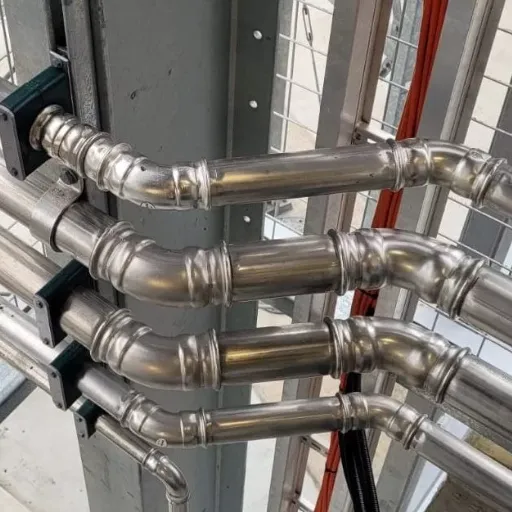
Best Practices for Maintaining Stainless Steel Fittings
Regular Inspection: Periodically inspect fittings for any signs of leaks, corrosion, or physical damage. Pay close attention to joints and connections.
Proper Cleaning: In applications where cleanliness is important (e.g., food processing), use appropriate cleaning agents that are compatible with stainless steel. Avoid using cleaners containing chlorides (like bleach), which can cause pitting corrosion.
Avoid Contamination: During installation and maintenance, prevent contact with carbon steel tools or particles. Iron contamination can compromise the passive layer and lead to localized corrosion (rust spots).
Correct Tightening: For threaded and flanged fittings, use a torque wrench to apply the correct amount of force. Overtightening can damage threads or gaskets, while under-tightening can cause leaks.
Common Issues and Troubleshooting Tips
Leaks at Threaded Joints: Often caused by improper sealing. Re-apply a high-quality thread sealant or PTFE tape and ensure the fitting is tightened correctly.
Gasket Failure in Flanged Connections: Gaskets can degrade over time. If a leak occurs, replace the gasket and ensure the bolts are tightened evenly in a star pattern.
Surface Corrosion (Rusting): This is usually due to iron contamination. Clean the surface with a non-abrasive pad and a cleaner containing oxalic acid to remove the rust and restore the passive layer.
Crevice Corrosion: Can occur in tight spaces where oxygen is limited, such as under gaskets or in thread roots. Using molybdenum-containing grades like 316 and ensuring joints are well-sealed can mitigate this risk.
Maximizing the Lifespan of Your Pipe Fittings
The longevity of stainless steel pipe fittings ultimately depends on three key elements:
Correct Selection: Choosing the right material, type, and size of fitting for the application is the most critical step.
Proper Installation: Following best practices during installation, including correct tightening and avoiding contamination, prevents premature failure.
Routine Maintenance: A program of regular inspection and cleaning will identify potential issues before they become serious problems, ensuring the system operates reliably for decades.
Recently Posted
-
How High Quality Seamless Rectangular Steel Pipe Enhances Structural Durability and Strength
December 18, 2025In the realm of structural engineering and industrial manufacturing, material selection dictates the longevity, safety, and effici Read More
 -
Advantages of Using High Quality Seamless Rectangular Steel Pipe in Structural Projects
December 17, 2025In modern engineering and construction, the choice of materials dictates the longevity, safety, and efficiency of a project. Among Read More
 -
Key Features of the Best Seamless Square Steel Pipe for Durability and Strength
December 16, 2025In structural engineering, heavy manufacturing, and critical infrastructure, the integrity of materials is non-negotiable. Among t Read More
 -
How New Welded Round Steel Pipe Revolutionizes Piping Systems Across Industries
December 15, 2025The integrity of industrial infrastructure relies heavily on the quality of its foundational components. From high-rise constructi Read More

Contact Us
Recommended Products
-
 China Supplier QSTE600TM Welded Square Pipe Round Cold Bending Carbon Steel TubeNegotiableMOQ: 1 Ton
 -
Buy Discount Carbon Steel Rectangular Tubing Cold Drawn Rectangular Seamless TubesNegotiableMOQ: 1 Ton
-
Agricultural Machinery Square Steel Tube Hollow Seamless Pipe Made in ChinaNegotiableMOQ: 1 Ton
-
Low Price Steel Pipes Welded Square Tube Square Hollow Cold Bending China SupplierNegotiableMOQ: 1 Ton
-
Post Weld Heat Treatment Special Shape Steel Pipe Cold Drawn Welded Seamless TubeNegotiableMOQ: 1 Ton
-
Mild Steel Welded Square Tube Mild Carbon Welded Customized Round Welded TubesNegotiableMOQ: 1 Ton
-
China Factory Supply QSTE500TM Welded Square Pipe Seamless Rectangular TubesNegotiableMOQ: 1 Ton
-
China Supplier QSTE700TM Welded Square Pipe Round Cold Bending Carbon Steel TubeNegotiableMOQ: 1 Ton
-
1.5*1.5 Inch CHS SHS RHS Hollow Section Pre Galvanized Square GI Tube Rectangular Steel GI Round PipesNegotiableMOQ: 1 Ton
-
Welded Square Steel Tube Cold Bending Seamless Steel Round Pipe Free SampleNegotiableMOQ: 1 Ton
-
Hot Sale Free Mold Customized Size Square Tube Hollow Section Welded Steel PipeNegotiableMOQ: 1 Ton
-
Hollow Section SCH80 Square Steel Pipe Seamless Rectangular Steel Pipes From ChinaNegotiableMOQ: 1 Ton
-
ASTM A500 Grade B/C Black Annealed Welded Carbon Steel Tube - Round Square Rectangle for ScaffoldingNegotiableMOQ: 1 Ton
-
Stainless Steel Handrail Tube - Custom 202/304/316 Welded Round Pipe for BalustradesNegotiableMOQ: 1 Ton
-
20mm Diameter Stainless Steel Pipe - Custom 201/304/316 Welded/Seamless Round TubeNegotiableMOQ: 1 Ton
-
316/316L Stainless Steel Pipe - Custom Welded/Seamless Round Tube for Hydraulic SystemsNegotiableMOQ: 1 Ton
-
Custom Stainless Steel Decorative Tube - 304/316L Mirror Brushed No.4/8K Round Square Rectangular for RailingsNegotiableMOQ: 1 Ton
-
ASTM A106B Steel Pipe - Hot/Cold Rolled Welded/Seamless Round Boiler Tube Alloy/CarbonNegotiableMOQ: 1 Ton
-
4140 Carbon Seamless Steel Pipe - Hot/Cold Rolled High Precision Round TubeNegotiableMOQ: 1 Ton
-
SPCC DC01 DC04 Carbon Steel Pipe - Welded Round Square 1-8 Inch for Oil & Gas IndustryNegotiableMOQ: 1 Ton