
 Business License

Top Benefits of Using Seamless Rectangular Pipe in Structural Engineering Projects
Modern structural engineering demands materials that offer superior strength, reliability, and versatility. Among the various options available to architects and project managers, seamless rectangular pipe stands out as a critical component for high-stakes applications. Unlike its welded counterparts, seamless tubing offers uniform strength and aesthetic precision, making it a preferred choice for everything from automotive manufacturing to heavy infrastructure.
This comprehensive guide explores the technical advantages, manufacturing processes, and diverse applications of seamless rectangular steel tubing. Whether sourcing materials for a high-rise development or designing heavy machinery, understanding the properties of this material is essential for ensuring project longevity and safety.
Introduction to Seamless Rectangular Steel Tubing
Definition and Composition of Seamless Rectangular Pipe
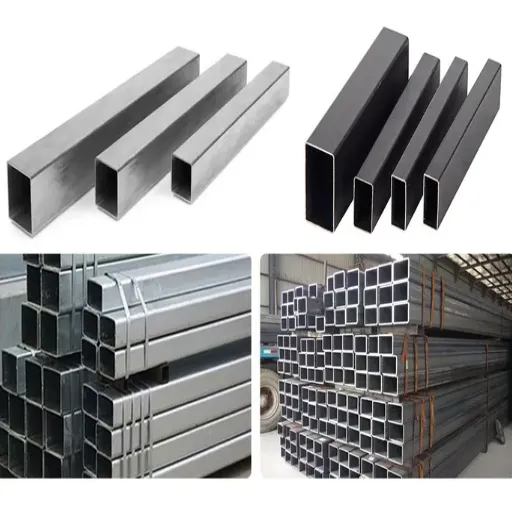
Seamless rectangular pipe is defined by its homogeneity. It is typically manufactured from carbon steel, alloy steel, or stainless steel, depending on the environmental requirements of the project. The composition usually includes iron, carbon, manganese, and trace amounts of other elements like silicon or sulfur to enhance machinability and strength.
The defining characteristic is the lack of a longitudinal weld. In welded tubing, a flat steel plate is rolled and fused, creating a heat-affected zone (HAZ) that can be susceptible to corrosion or cracking under extreme stress. Seamless tubing is formed from a solid round steel billet, ensuring the grain structure of the metal remains continuous and undisturbed.
Overview of Manufacturing Processes
The production of seamless rectangular pipe involves a sophisticated combination of heating, piercing, and shaping. The process ensures the material maintains its structural integrity throughout transformation.
Rotary Piercing: A solid steel billet is heated to extreme temperatures and pushed over a piercing rod to create a hollow shell, often called a "mother tube."
Elongation and Rolling: The hollow shell is rolled and stretched to reduce wall thickness and increase length, refining the grain structure of the steel.
Cold Drawing or Hot Finishing: To achieve the rectangular shape, the round tube is passed through a series of shaping dies. This can be done while the steel is hot (hot finished) or at room temperature (cold drawn) to achieve tighter tolerances and superior surface finish.
Thermal Treatment: The final product often undergoes heat treatment to relieve internal stresses caused by the shaping process.
Difference Between Seamless and Welded Tubing
Understanding the distinction between seamless and welded tubing is vital for procurement. While welded tubing is often more cost-effective, seamless tubing provides superior performance metrics.
Pressure Ratings: Seamless pipes generally withstand approximately 20% higher working pressures than welded tubes of the same size and grade.
Corrosion Resistance: The absence of a weld seam removes the primary site for intergranular corrosion, extending the lifespan of the pipe in harsh environments.
Uniformity: Seamless pipes offer uniform wall thickness and concentricity, which is critical for applications requiring precise balance, such as rotating shafts or high-speed machinery.
Mechanical Properties of Seamless Rectangular Tubing
Strength and Durability
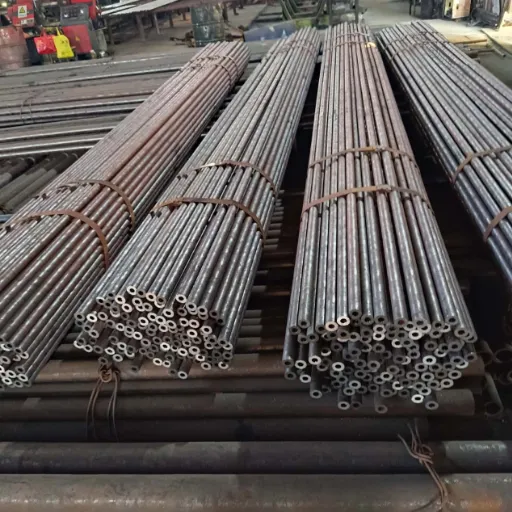
The primary advantage of seamless rectangular pipe is its high strength-to-weight ratio. The cold-drawing process specifically hardens the steel, increasing its yield and tensile strength.
Yield Strength: This measures the stress at which the material begins to deform plastically. Seamless variants typically exhibit higher yield strengths compared to welded counterparts due to the work-hardening process.
Torsional Strength: The closed rectangular shape provides excellent resistance to torsion (twisting). This makes it superior to open sections like I-beams or C-channels for resisting lateral loads.
Fatigue Life: In dynamic applications where loads fluctuate, the seamless nature prevents stress risers from forming at a weld seam, significantly improving fatigue life.
Impact Resistance and Load-Bearing Capacity
Structures subject to shock, vibration, or sudden impact require materials that are tough rather than brittle.
Shock Absorption: The uniform microstructure allows seamless tubing to absorb energy efficiently. This property is essential in automotive chassis design and seismic structural applications.
Column Load: When used as columns, rectangular tubing has a radius of gyration that provides excellent resistance to buckling in multiple directions.
Cryogenic Performance: Specific grades of seamless pipe maintain their toughness even at sub-zero temperatures, preventing brittle fracture in arctic or cryogenic environments.
Comparison with Other Steel Grades
Seamless rectangular tubing is often compared against standard structural steel grades.
vs. Carbon Steel Plate: While plate steel is strong, fabricating it into a box section requires welding, introducing the HAZ weakness. Seamless tubing provides the box shape naturally.
vs. Cast Iron: Seamless steel offers ductility that cast iron lacks. Under heavy impact, cast iron may crack, whereas seamless steel will deform, providing a safety margin before catastrophic failure.
vs. Aluminum: While aluminum is lighter, seamless steel pipe offers significantly higher modulus of elasticity (stiffness) and fire resistance, making it non-negotiable for high-rise framing.
Applications of Seamless Rectangular Steel Tubes
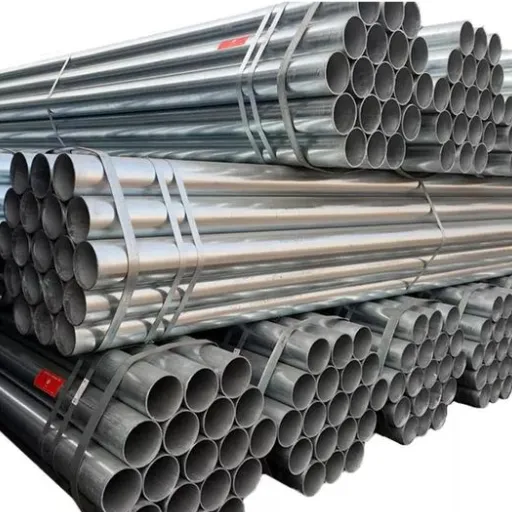
Use in Structural Engineering Projects
In the construction sector, aesthetics often meet engineering necessity. Seamless rectangular tubing provides clean lines for exposed architectural steel while doing the heavy lifting.
Framework and Columns: Used extensively in skeletal frames for buildings, offering high load-bearing capacity with a smaller footprint than concrete.
Bridges and Walkways: The high torsional stiffness makes these tubes ideal for bridge chords and pedestrian walkway supports that must resist wind and twisting loads.
Seismic Retrofitting: Engineers use seamless heavy-wall tubing to reinforce existing structures in earthquake-prone zones, adding ductility and strength.
Common Industries and Sectors Utilizing Rectangular Tubing
Beyond construction, specialized industries rely on the precision and reliability of seamless tubing.
Automotive and Transportation: High-performance roll cages, chassis components, and trailer frames utilize seamless tubing to protect passengers and cargo.
Oil and Gas: Offshore platforms and drilling equipment require seamless pipes to withstand immense pressure and corrosive ocean environments.
Heavy Machinery: Cranes, bulldozers, and agricultural equipment use seamless rectangular sections for booms and arms that must resist bending under heavy loads.
Aerospace: Ground support equipment and structural testing rigs utilize high-strength seamless alloys for precision and safety.
Case Studies of Successful Applications
Real-world applications highlight the necessity of seamless technology.
High-Speed Rail Infrastructure: In modern rail projects, seamless rectangular tubing is used for overhead electrification masts. The dynamic loads from passing trains require a fatigue-resistant material that welded tubes often cannot provide reliably over decades.
Deep-Sea Exploration Units: ROV (Remotely Operated Vehicle) frames constructed from seamless stainless rectangular pipe withstand immense hydrostatic pressure while protecting sensitive electronics.
Stadium Roof Structures: Large cantilevered roofs in sports stadiums utilize heavy-wall seamless tubing to handle complex wind loads and the weight of suspended equipment (scoreboards, lighting) without significant deflection.
Specifications and Sizing for Seamless Rectangular Pipe
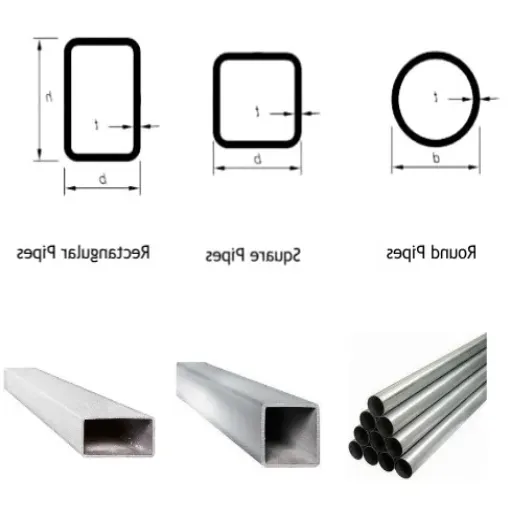
Standard Sizes and Shapes Available
Seamless rectangular tubing is available in a vast array of dimensions to suit different engineering needs.
Size Range: Standard sizes typically range from small precision tubes (e.g., 10mm x 20mm) up to massive structural sections (e.g., 400mm x 600mm).
Wall Thickness: This is a critical variable. "Light wall" tubing is used for furniture and aesthetics, while "heavy wall" tubing is reserved for structural columns and hydraulic cylinders.
Length: Standard mill lengths are usually 6 meters (20 feet) or 12 meters (40 feet), though manufacturers can provide cut-to-length services.
Custom Sizing Options and Considerations
For specialized projects, off-the-shelf sizes may not suffice.
Custom Dimensions: Manufacturers can adjust dies to produce non-standard aspect ratios (e.g., very flat rectangles) for specific clearance requirements in machinery.
Tolerances: Seamless tubing generally holds tighter dimensional tolerances than welded tubing. However, engineers can request "precision" tolerances for applications like telescoping arms where fit is critical.
Surface Finish: Options range from "as-rolled" (rough) to pickled and oiled, or even polished for architectural applications.
Choosing the Right Grade for Your Project
Selecting the correct grade of steel is just as important as selecting the shape.
ASTM A500: The standard specification for cold-formed welded and seamless carbon steel structural tubing in rounds and shapes. Grade B and Grade C are the most common, with Grade C offering higher yield strength (50 ksi).
ASTM A106: While typically for round pressure pipes, this spec is sometimes relevant for high-temperature applications involving custom seamless shapes.
EN 10210: The European standard for hot-finished structural hollow sections.
Material Certification: Always ensure suppliers provide Mill Test Reports (MTRs) confirming the chemical composition and mechanical properties of the specific heat lot.
Recently Posted
-
How High Quality Seamless Rectangular Steel Pipe Enhances Structural Durability and Strength
December 18, 2025In the realm of structural engineering and industrial manufacturing, material selection dictates the longevity, safety, and effici Read More
 -
Advantages of Using High Quality Seamless Rectangular Steel Pipe in Structural Projects
December 17, 2025In modern engineering and construction, the choice of materials dictates the longevity, safety, and efficiency of a project. Among Read More
 -
Key Features of the Best Seamless Square Steel Pipe for Durability and Strength
December 16, 2025In structural engineering, heavy manufacturing, and critical infrastructure, the integrity of materials is non-negotiable. Among t Read More
 -
How New Welded Round Steel Pipe Revolutionizes Piping Systems Across Industries
December 15, 2025The integrity of industrial infrastructure relies heavily on the quality of its foundational components. From high-rise constructi Read More

Contact Us
Recommended Products
-
 China Supplier QSTE600TM Welded Square Pipe Round Cold Bending Carbon Steel TubeNegotiableMOQ: 1 Ton
 -
Buy Discount Carbon Steel Rectangular Tubing Cold Drawn Rectangular Seamless TubesNegotiableMOQ: 1 Ton
-
Agricultural Machinery Square Steel Tube Hollow Seamless Pipe Made in ChinaNegotiableMOQ: 1 Ton
-
Low Price Steel Pipes Welded Square Tube Square Hollow Cold Bending China SupplierNegotiableMOQ: 1 Ton
-
Post Weld Heat Treatment Special Shape Steel Pipe Cold Drawn Welded Seamless TubeNegotiableMOQ: 1 Ton
-
Mild Steel Welded Square Tube Mild Carbon Welded Customized Round Welded TubesNegotiableMOQ: 1 Ton
-
China Factory Supply QSTE500TM Welded Square Pipe Seamless Rectangular TubesNegotiableMOQ: 1 Ton
-
China Supplier QSTE700TM Welded Square Pipe Round Cold Bending Carbon Steel TubeNegotiableMOQ: 1 Ton
-
1.5*1.5 Inch CHS SHS RHS Hollow Section Pre Galvanized Square GI Tube Rectangular Steel GI Round PipesNegotiableMOQ: 1 Ton
-
Welded Square Steel Tube Cold Bending Seamless Steel Round Pipe Free SampleNegotiableMOQ: 1 Ton
-
Hot Sale Free Mold Customized Size Square Tube Hollow Section Welded Steel PipeNegotiableMOQ: 1 Ton
-
Hollow Section SCH80 Square Steel Pipe Seamless Rectangular Steel Pipes From ChinaNegotiableMOQ: 1 Ton
-
Agricultural Machinery Cab Structural Tube Steel PipeNegotiableMOQ: 1 Ton
-
High Performance Seamless Curved Steel Pipe With Mill Test ReportNegotiableMOQ: 1 Ton
-
High Strength Seamless Carbon Steel Pipe With Mill Test CertificateNegotiableMOQ: 1 Ton
-
ASTM A500 Grade B/C Black Annealed Welded Carbon Steel Tube - Round Square Rectangle for ScaffoldingNegotiableMOQ: 1 Ton
-
Stainless Steel Handrail Tube - Custom 202/304/316 Welded Round Pipe for BalustradesNegotiableMOQ: 1 Ton
-
20mm Diameter Stainless Steel Pipe - Custom 201/304/316 Welded/Seamless Round TubeNegotiableMOQ: 1 Ton
-
316/316L Stainless Steel Pipe - Custom Welded/Seamless Round Tube for Hydraulic SystemsNegotiableMOQ: 1 Ton
-
Custom Stainless Steel Decorative Tube - 304/316L Mirror Brushed No.4/8K Round Square Rectangular for RailingsNegotiableMOQ: 1 Ton